
Knicks Game or Life Changed?
I'm investing $10,000 in a new coach.
For the same amount, I could buy a ticket to the Knicks' NBA finals game.
Let me set the record straight—I grew up 12 miles from NYC, and am a proud Jersey boy. What that means is if we had a pro sports team, I would be for them. That was only possible in Basketball and Hockey. (Nets & Devils)
I was angry at Jersey-born Knicks fans when a team was playing in our backyard. (Don't even get me started with South Jersey and Philadelphia.)
Since Basketball was my sport, I got to bask in the Jason Kidd era and cry when they lost in the finals back-to-back in 02-03
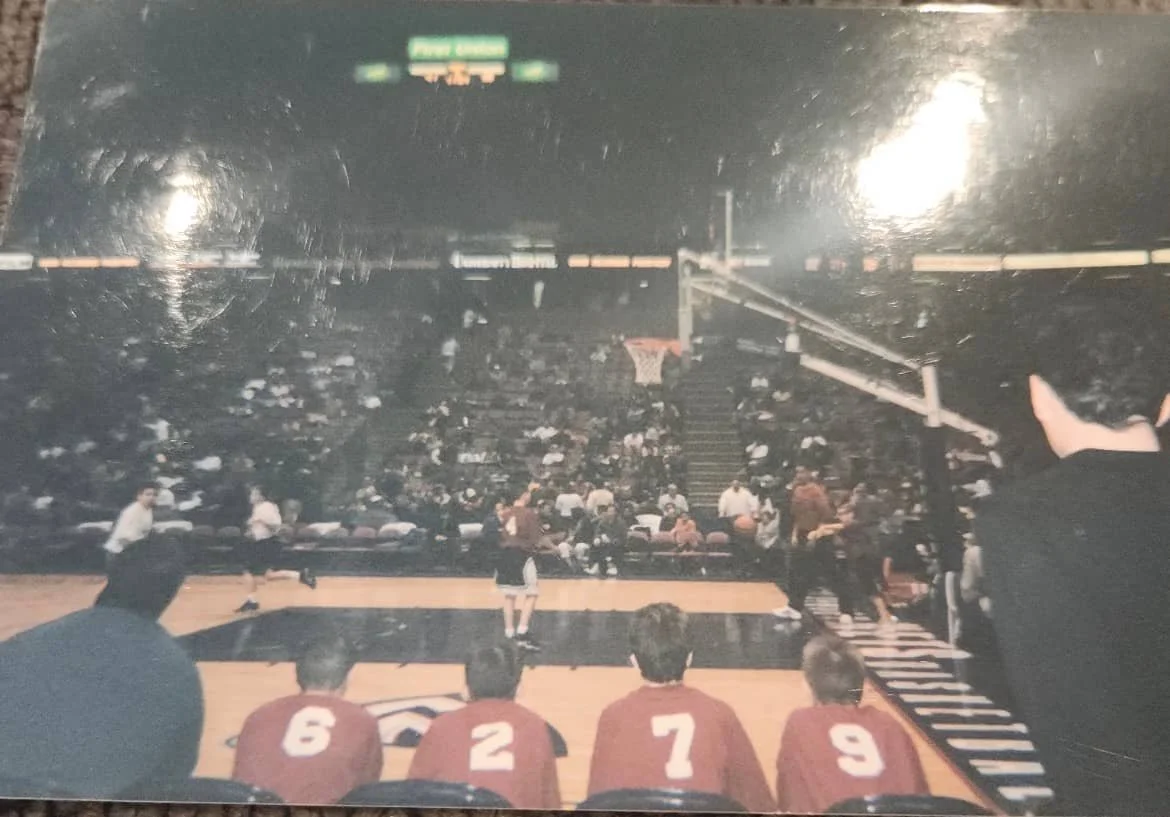
Me playing at a Nets game during halftime.
The Nets left Jersey, and I don't watch basketball anymore, so I guess I'm rooting for the Knicks, but honestly, I don't care.
What fascinates me is how much people are paying to go to the game.
If you look at Tickets on StubHub for game four, the lowest-nosebleed-section are selling for $9,399.
Let's remember that a basketball game lasts 60 minutes. Would you pay $10k to watch an hour-long game?
(If you're not from the US, imagine your country in the finals of the World Cup. That's the energy in NYC right now.)
Many people are paying that and much more.
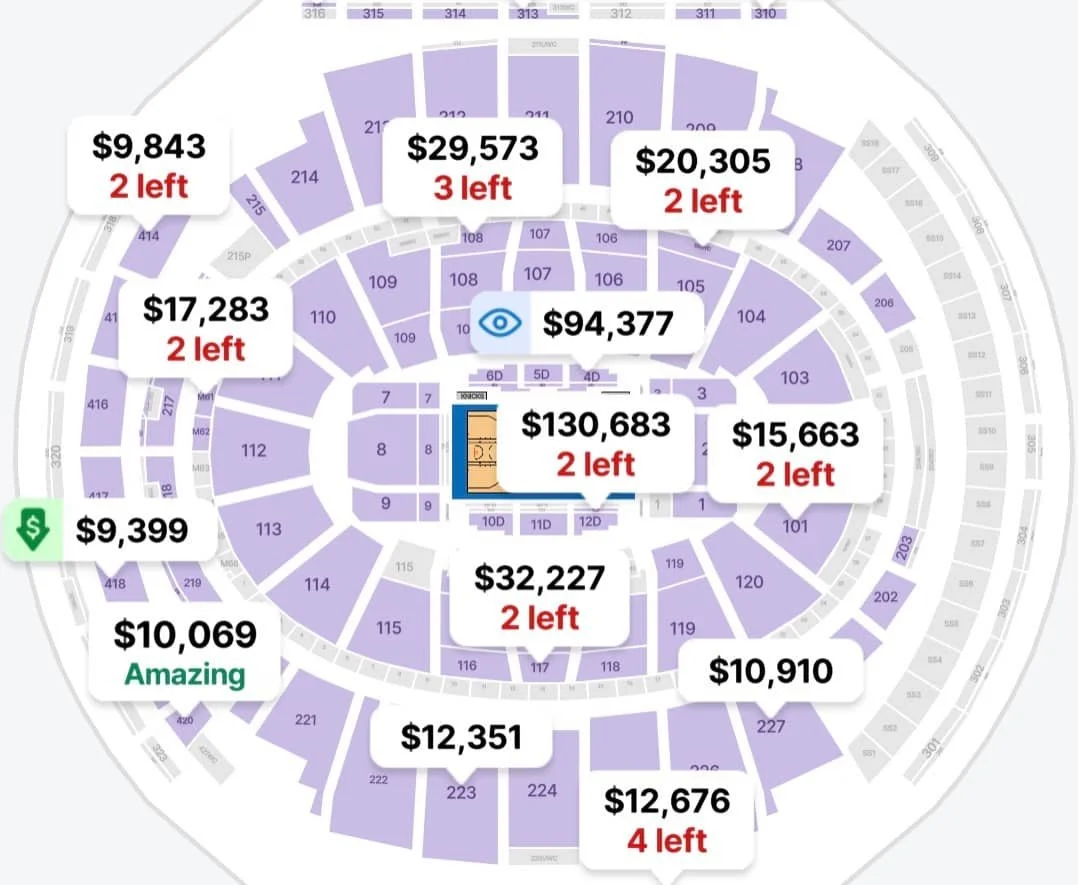
You might say, well, NYC is the richest city in the world—and that is true—yet, I bet there will be diehard Knicks fans finding the funds to get the opportunity to be there when they win their first title in over 50 years.
So what are people paying for?
They are paying for the once-in-a-lifetime chance to be in the energy of something greater than themselves, to revel in the ecstatic glory of their team winning, and then to tell the story of "I was at that game" for the rest of their lives.
Yes, it will be fun, it will be exhilarating, but after the title is won and the lights go out, what about that person's life will actually be different?
They may still be working an unfulfilling job, having the same arguments with their spouse, and not realizing their potential.
They paid $10,000 to watch other people live their dreams, yet what might happen if that same person invested in six months of deep inner work, getting clear on their vision, and executing it?
What if they bet on themselves realizing their dreams, rather than feeding off others?
The truth is, most people don't see the value. Many would balk at paying that much for a coach, just as some would for a basketball game. Neither is right nor wrong; it's just a different set of values.
If you do any sort of client-based work, your job is not to appeal to the masses, but to find problems to solve for the right people who value said problem enough to charge prices where you can actually make a living and not be anxiously hustling session to session.
Seth Godin says lowering your prices is a race to the bottom. His advice is to get better clients. Better clients pay more and are more committed, leading to better results and testimonials, making you more confident in your services, allowing you to charge more and attract better clients. It's a virtuous cycle.
Charging more increases the container's energy for you and your client.
When you charge more, you show up differently, you have more space, and more to give.
The client also shows up differently. When you spend more on something, you pay more attention to it, which enhances focus and execution.
I saw a therapist recently who said he was seeing 30 clients a week. Both times, he showed up 7 minutes late to our session. I could feel his rushing and lack of presence. I wasn't paying much, so what could I expect? Because of this, I didn't really take anything into account during the week.
Now that I've invested $10k, something shifted the moment I said yes. I feel it throughout the week, and you bet I'm doing what I say I will do between sessions.
When my friend invested $18,000 in a coach, his first comment to me was how good it felt to give that money to himself. Yes, the coach made the money, but that amount was a personal commitment to himself, a statement to his subconscious that "I'm worth investing $18k into."
People are paying for more than time.
The person going to the Knicks game isn't paying for a 60-minute basketball game; they are paying for much more: the anticipation, the energy, the story.
This can be true for the right clients. They are not paying for an hour session. They are paying for the changes they make as they go about their lives, the confidence they feel when asking for new opportunities, and the results they receive when they live a life that is more true to them.
But Lou, are there coaches with no experience charging astronomical amounts?
Of course.
Is it unethical?
That depends. You would have to ask the clients.
When criticized for his lack of credentials, Tony Robbins is famous for saying he had a PHD in results.
If the person is making false claims and manipulating people into doing something not in their best interest, yes—unethical.
But if the people are happy and see the perceived value, then who's to judge?
Everyone has a story about money, and no one's holier than thou.
Some people perceive $180,000 in a watch.
Others $300,000 in a college degree.
Some judge money, yet are in constant anxiety about it.
I'll leave you with this.
No one is going to magically pay you more, just because. (If you worked for a company, you already know this.)
Before you want others to value you, you have to value yourself.
That's true for more than just money.
Just as there are people willing to pay five figures on a basketball game, there are people who value what you do at a higher rate than what you currently charge.
It won't be everyone, and that's ok.
But Lou, I want to help people who don't have the funds. I want to help myself, like 10 years ago, when I had no money.
This is common. I promise you will be able to help people who don't have the funds much better when you are not in survival mode.
I love the concept of "Expensive or Free".
When you have more than enough, you can create and do more things for free, and you can make better stuff.
You can create scholarships and discounts for those who really need them.
You can do it all without resentment.
(Sidenote: If you want to help people who don't have funds, you don't have a business; you have a charity. Nothing wrong with that, it's just a different model, and still, you will have to learn to value your services to fundraise and ask for money from people who do have it.)
What I'm not saying:
Make people spend money they don't have, creating distress
Manipulate people into doing things that are not in their best interest
Charge more without understanding your relationship to the price
I'm not saying make more money for the sake of more money and endless greed. What I'm actually saying is that by charging more, you get to think about money less, so you can put more attention on your craft and the things in your life you care about
Whether you're the coach or client, I hope this helps you reflect on what you value and how you might show up differently if you valued yourself more.
This is a juicy topic, and I'd love to hear what it brings up for you.